

war games
playing with life in 2026 iran

It’s hard not to feel as though *gestures wildly* all this has been inevitable.
When I see the headlines about war with Iran, I hear Anderson Cooper, Wolf Blitzer, and Larry King echo in my head. It’s never their current iterations; it’s always their 2002 cadences.
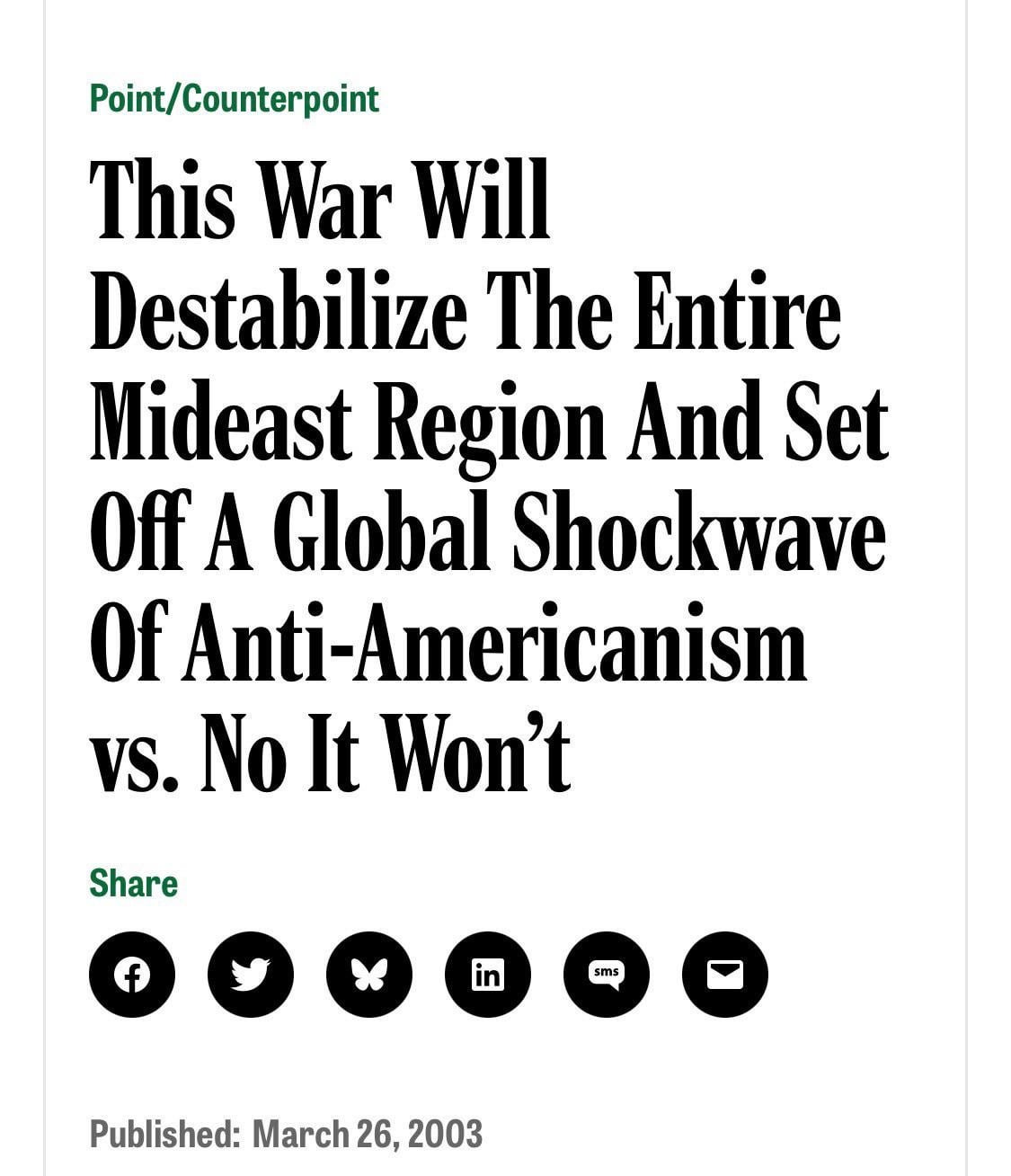
The news coverage I grew up watching served to remind Americans of their enemies (Iraq, Afghanistan, Iran, Islam itself) and their friends (bombs). Through the entirety of the War on Terror, myself and my classmates were fed the narrative that sold two invasions and 940,000 dead. “The Middle East” is our enemy. Iran, Iraq, Afghanistan, Pakistan, Yemen, Syria, and every other Muslim-majority country surrounding were volatile, sneaky, nuclear, war-torn. What’s a little more? How’s 555 dead?
War with Iran has always been an American Dream, as much as it’s been an American game. The Islamic Republic of Iran and Ayatollah Khamenei have always been the big bad: the final boss for the freedom-loving United States to defeat. The promise on the other side of that defeat has never been clear beyond vengeance, a lick-back, a good opportunity to rally around the flag and pray (to a Christian God) for our good old boys to come home. To bomb or to go to war with Iran has always been a bargaining chip, the next step in a global game of Monopoly, a shitty drawing scribbled with pride by a petulant child. We insist on putting its bullshit up on the fridge.
I watched Independence Day for the first time in 2021. It’s the kind of Olympus Has Fallen, presidential action movie that my mom always likes. I was surrounded by earnest, well-meaning, DC leftists. A blonde roommate I didn’t know very well mused on his first actions were he to become president, frustrated with the character. He said what he said naturally, without much thought, and without any hesitation.
“Why doesn’t he just bomb Iran?”
It was obvious. A good first move. Something Selina Meyer would sign off on. A few people chuckled and went back to watching. I squeezed the hand of the person next to me, hoping he’d say something to the man he knew far better than I. He didn’t.
I would confront him later, asking why everyone felt so comfortable joking about bombing an entire country. Asking why no one had challenged him, no one had told him to shut up, no one had even blinked. These were self-purported leftists. They were “super interested in Latin American politics”—whatever that means. I was surprised at the laughter and surprised at the callousness. I asked about it later, mostly from a place of humanity, but the boy in front of me reverted to identity politics.
“Well, he didn’t know that you’re Iranian. If he did, he probably wouldn’t have said it.”1
I’m born and raised in California. Being half-Iranian in ethnicity doesn’t hold much weight when actual Iranian people are the targets of these metaphorical-turned-literal bombs. But I was (naively) amazed at the ease with which bombing Iran could be posited, and how quickly the argument zoomed into me, instead of zooming out to the “joke” of bombing a 5,000 year old civilization with a population of 92.4 million.
I stopped hanging out with them, but the blonde roommate’s easy words stayed with me.
I thought of him when I saw the news out of Minab yesterday morning, where a girls’ elementary school was hit by U.S. and Israeli airstrikes. The death count is now up to 180 children. In every person is a universe, and every child is our collective responsibility. It feels painful to know my tax dollars have stolen their futures.
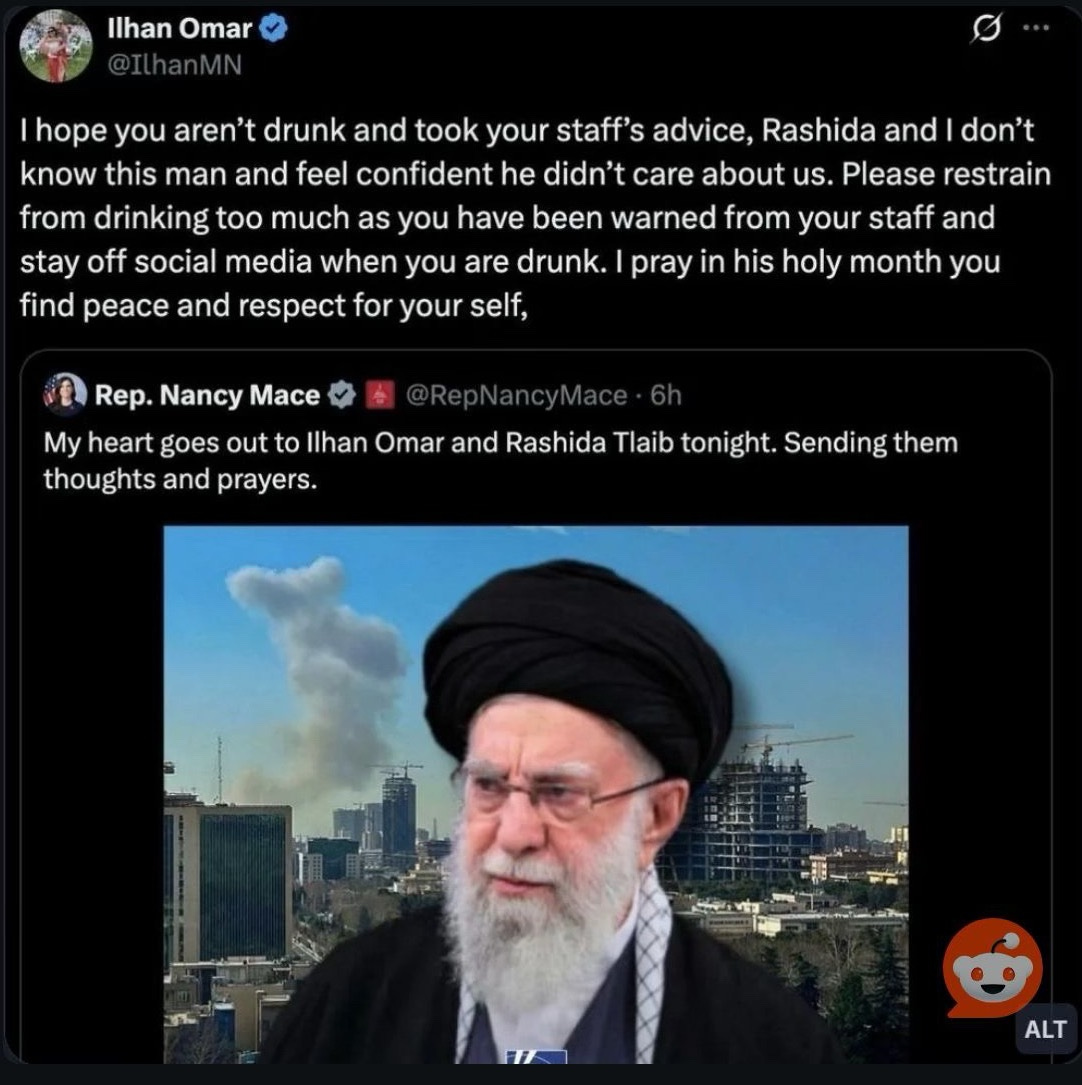
I do not believe little girls should be collateral to the dream of regime change, just as I do not believe between 7,000 and 30,000 protesters should be mass-murdered by the IRGC. I know that the main, public target of this bombing campaign was killed. And to me, Ayatollah Khamenei is far from a martyr. I shared the vicious excitement of my fellow Iranians when seeing reports of the Ayatollah dead. Knowing he’ll answer for what he’s done to the Iranian people brings clarity to my writing and spirit. But a war led by the United States and Israel won’t end here, even if they want it to. The texts and the memes and the videos and the cheers for Khamenei’s ending sit uncomfortably next to the grief of another borderless war. How to balance the grief for families, children, and the oncoming realities of war for women, land and region... with the joy of a dictator dead?
For Iranians, perhaps it’s possible. But that nuance is harder for those accustomed to red v. blue. But it isn’t a game when bazaar protests break out into national uprisings, and it isn’t a game when the people protesting economic suffering become numbers in a death count, edited faces on an Instagram post, just a bunch of names pasted next to others.2 All this to say: Iranian life isn’t a game.
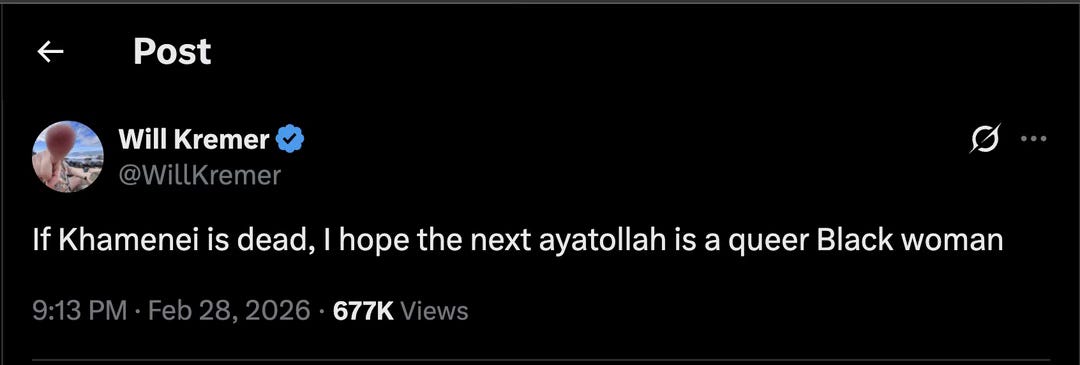
The Iranian diaspora is intense and divided because it is hurting. Those within who treat bombs as liberation have pieces of my empathy, as I know what brought them to this point. But they don’t have my agreement.
I want to ask the Iranian diaspora as much as I want to ask that blonde roommate from back in DC: Is this worth it? Is the applause for Trump and Netanyahu worth the young, Iranian lives they’re helping to destroy? Does it feel powerful to make Lindsay Graham your bedfellow? Does it feel good to separate yourself from Arabs, Muslims, or anyone darker than yourself to dream up some Persian Version of laicete? It seems the images of miniskirted Iranian women in the ‘60s have encouraged the bloodlust that, yes, ended Khamenei’s life, but will also destroy families, cultural sites, entire histories, and more. They must be exhausted, by now, of using their Iranianness to ensure the people—choked and starved as they are by the U.S.-led isolation campaign—have even less to live for.
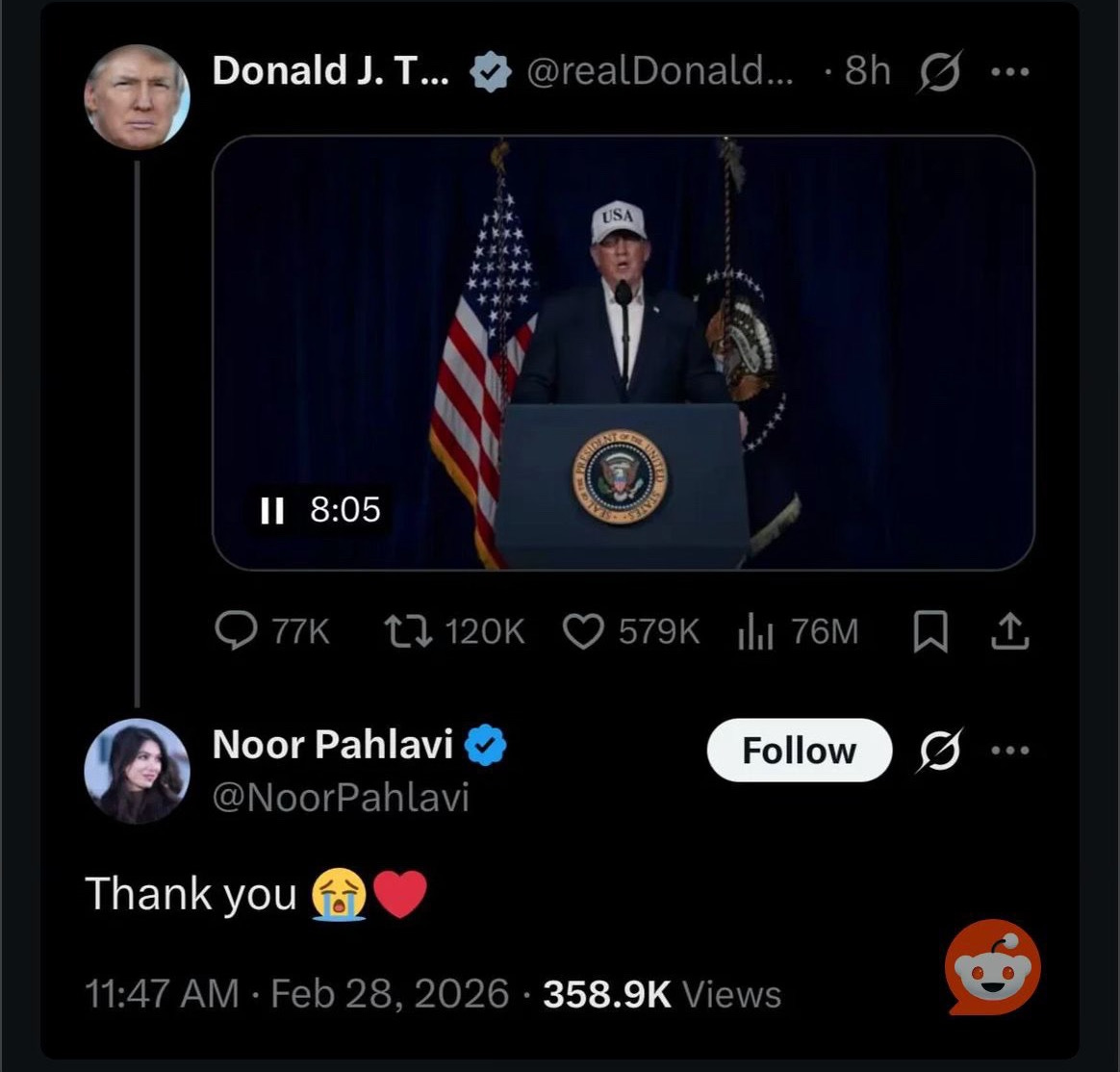
I understand that Iranians in Iran may be praising Trump, may celebrate the bombs befallen Khamenei, may see greater allyship in the likes of Israel than in regional countries. While I celebrate the death of a dictator, I know that Trump and Netanyahu won’t stop here. But I hope the Iranian people are able to choose their own destiny. Given my distance, all I have is respect for the individuals who organize, make art, and speak out against the regime from inside Iran. They are reacting to and fighting against more than we, and they are who I look to and learn from most in my own organizing—even when we disagree on who to cheer for.
Now, back to diaspora Iranians: I want to remind us of something. War and empire always comes home. You may think yourself to be a passionate spectator, watching Khamenei’s residence burn on television as you jump with glee. It got a laugh out of me too, but let’s think future forward, shall we? In fact, since we diaspora members think so often about ourselves, let’s zoom in on what may happen to us.
As we continue the dangerous game of helping non-Iranians to see and frame the country (and by extension, its people) as barbaric, violent, depraved, and fundamentalist, Iranians in Iran won’t be the only people paying the price. First, it’ll be your aunt, your family friend, that distant cousin...since your family was lucky enough to get everyone out, right? But do you, North American and European Iranians, really think our countrymen will rally around us?
I’m sorry to say it, but you will be the enemy, too. They’re already talking about sleeper agents, 48 hours in. It won’t matter how many rallies you’ve organized, how much you’ve denounced Islam as a part of Iranian culture, how often you’ve let your hair loose in a crowd of white faces. If you’re Iranian, you’ll be a reminder of the enemy in another endless war. We are not exceptions. We barely need to look over our shoulders to see what Palestinian-Americans faced. Think of the Afghani and Iraqi-Americans since the “War on Terror.” Shit, think of yourself—you know they couldn’t tell the difference between us.
Also, don’t forget the Japanese-American families who had their land taken, their lives destroyed3 and their children separated from them and placed in internment camps. Remember Executive Order 9066, which designated all Japanese-Americans as “enemy aliens”, drummed up paranoia and racial resentment, and caused 110,000 people (many of whom were U.S. citizens) to be forcefully incarcerated. All in the name of war.
I think of the Japanese parallel very often when it comes to war. Being a third-culture kid, my extended family network tends to include my dad’s childhood friends. As a result, my godparents are members of a fun-loving Japanese-American family based in the Bay Area. The grandparents’ stories were part and parcel of my public school education on the events of World War II, including California’s history of Japanese Internment. The grandmother, Miyoko, was born in Manzanar: the large internment camp in Inyo County, California. The grandfather, Philip, was 10 when the atomic bomb fell on Nagasaki; he was lucky to be far enough outside the city when it happened.
I’ll never forget his voice over the phone, telling me he still remembered how the atomic bomb looked and sounded. Pure terror.
The realities and traumas of war are usually baked into stories of becoming “American.” That’s the case with a lot of diasporas and communities, including both Japan and Iran. But I’d hope that this context brings a certain anti-war vigilance for those of us who escaped it, no? I still feel surprised when I see diaspora Iranians encouraging the “four to five weeks” promised for the U.S.-Israeli invasion, just as I feel surprised when I hear racist and xenophobic remarks from my Japanese-American family. But we’re all walking contradictions, aren’t we? It’s hard to keep every overlapping history in mind. But I try anyway.
I think of Philip and Miyoko when I hear praises, or excuses, for the atomic bombs dropped during World War II and afterward. I think of my family when I hear bombing Iran tossed around like a game. I think of my godsister and -brother when I see Yellowface in art. I think of my mom and my aunt when I see reports of schoolgirls dead. And in the faces of Iranian protesters, I see myself and my friends—we’re doing the same on this side of the Atlantic with far fewer consequences. My Americanness has not yet dissolved my ability to see myself in people far from me, including the people of Iran and beyond. Despite our collective dreams for change, I hope my diaspora (and my country) remembers that it is the Iranian people who’ll bear the likely pain of that transformation.
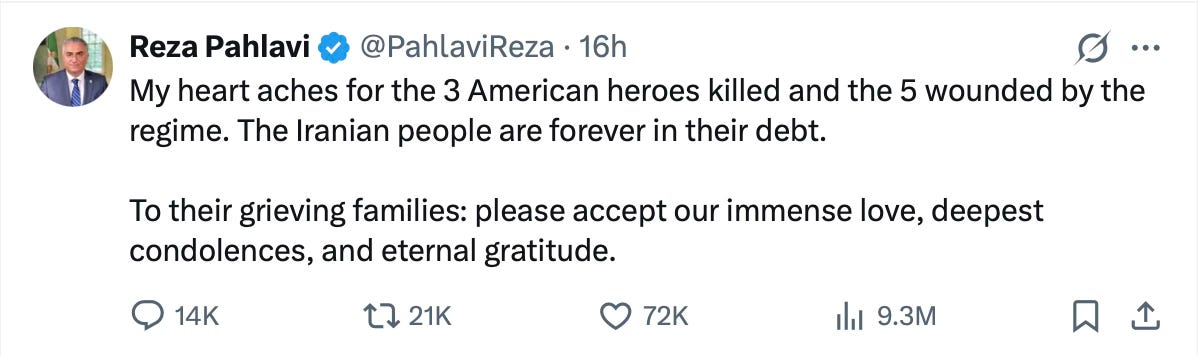
I know what happens to women in wartime: rape, violence, family separation, death, and use as propaganda. It is because of my humanity that I can understand the intra-Iranian calls for bombs, or kings, or fascists to liberate, but it is that same humanity which recognizes this won’t end with seeing Khamenei’s body. It is because of my feminism that I am plainly, proudly, anti-war. As the borders of this war spread and the casualties balloon, I hope our collective priority remains liberation for the Iranian people, and all in the region. Not for a subset. Not only the wealthy, or only friends of the Shah, or only friends of the mullahs, or only the secularists, or only the leftists, or only the Muslims. For everyone.
I want the same liberation for them as I want for those of us here, in the United States. We’re not that different, after all. I want pluralism. I want critical discourse without state punishment. I want a leader who isn’t a pedophile rapist. I want actual freedom of speech—not just for some. I want freedom for artists to express themselves, whether they do so subtly or loud-and-proud. I want accessible abortion care, a breakdown of the surveillance state, freedom for the incarcerated, and for kids to be fed, clothed, and given books for f*cking free. I want to use the Metro in my former home, Washington DC, without looking out for an ICE agent or the National Guard. I want self-determination, I want safety, and I want support from my government. I want the same things for the Iranian people.

I hope those who have been organizing, and fighting, and protesting inside Iran realize that dream someday soon. I hope they are protected, and safe, and are able to survive this bombing campaign. I hope the true, underground resistance in Iran will be better able to move, and build, and make something beautiful on the other side of all this. But I feel responsible, as every American who pays taxes should feel responsible, for the bombs which may kill the very people the U.S. claims to be supporting.
I pray, I pray, I pray for them.
Disclaimer: I’m a mixed Iranian American. I don’t speak for everyone. I only speak for me.
Things to read:
Substack:


Off Substack:
Amnesty International: What happened at the protests in Iran?
Ladan Rahbari: ‘Zionism as the Legacy of Cyrus’: (Online) Proxy Nationalism of Diasporic Iranians
Statement of the Tudeh Party of Iran: The Death of the Dictator, the People’s Demand for Transition from the Anti-People Regime of the Guardianship of the Jurist, and the Necessity of an Immediate Ceasefire and Creating the Conditions for the People to Determine Their Own Destiny and Lives
Neda Maghbouleh: The Limits of Whiteness: Iranian Americans and the Everyday Politics of Race (2017)
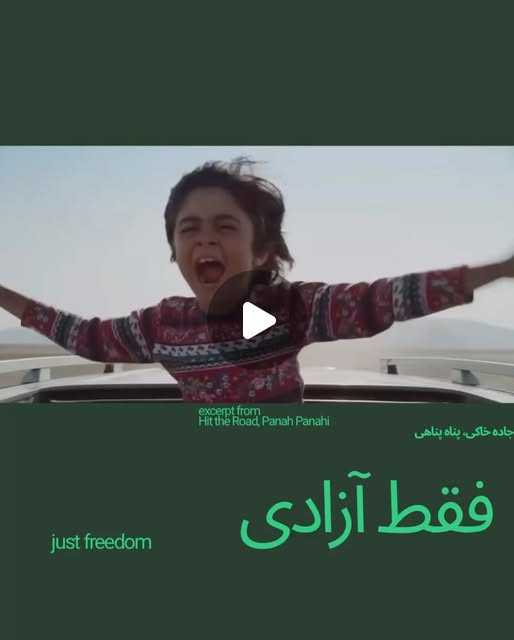
Collective for Black Iranians: For Freedom (below)
We would break up shortly afterward.
Nakane, Kazuko (2008). Nothing Left in My Hands: The issei of a Rural California Town, 1900-1942. Hayday Press.
ive loved and followed your newsletter for a while jade - from a fellow syrian american, sending you and your family love <3
Thank you for writing this